Yes: anyone financing a custom home in Michigan should expect to buy builder's risk insurance, also called course of construction insurance, before the first shovel hits the ground. Lenders almost always require it, and it protects the structure, materials, and work in place while your home is under construction. The typical cost runs 0.1% to 0.55% of the completed construction value, paid upfront for the length of the build. Here is what that budget line really covers, what it does not, and the questions to ask before you sign with a builder like Big Sky Development at Oaks of Tyrone.
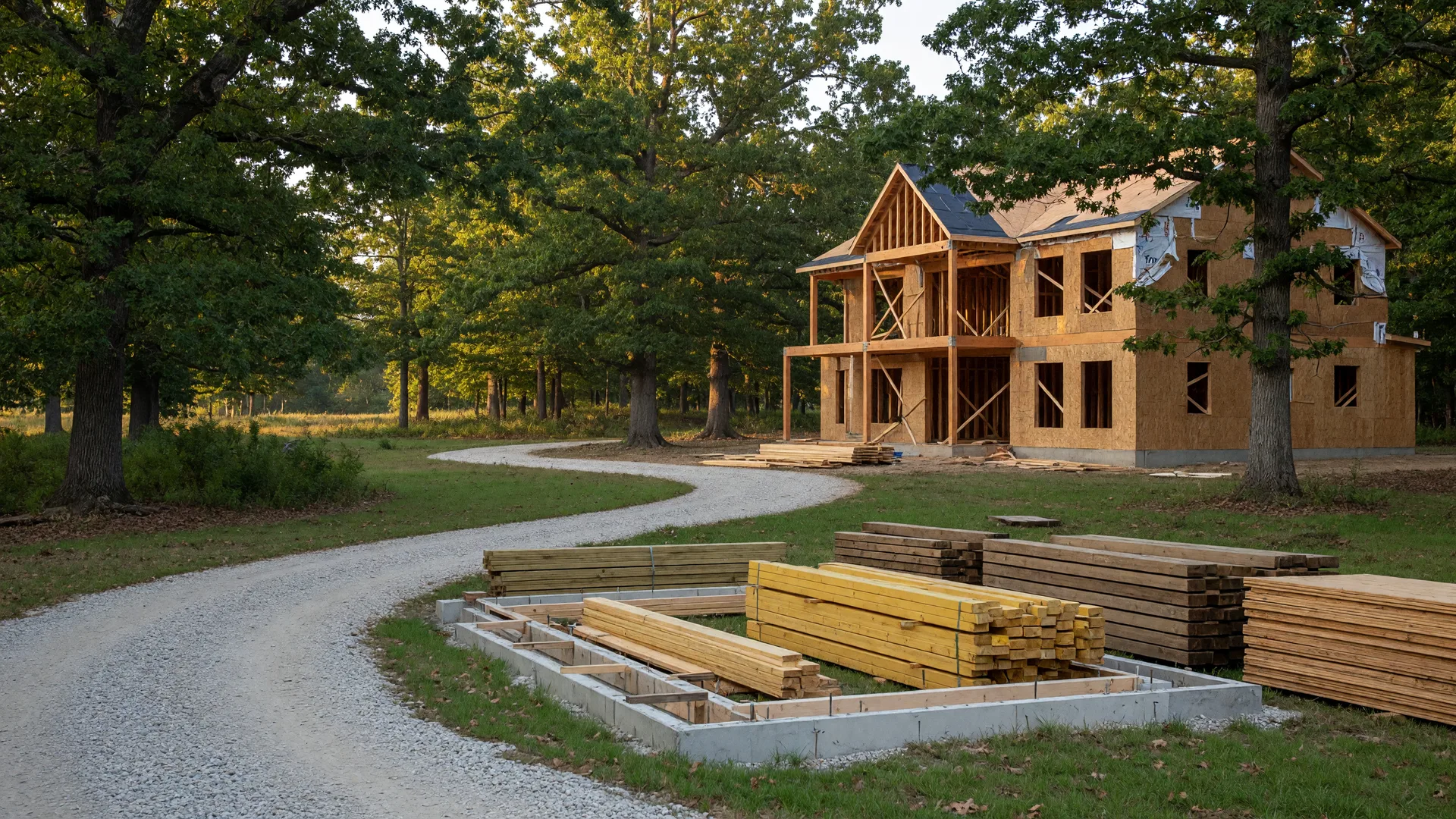
Why insurance comes up on nearly every custom home tour
Most buyers never think about construction insurance until their lender or builder mentions it, and it is one of the first budget surprises for people building for the first time. When we walk prospective buyers through the wooded homesites at Oaks of Tyrone, the pricing conversation usually starts with the package price and the lot, then moves to financing, taxes, and finally the question that catches people: what insurance do I need while the house is going up?
The reason it surprises people is simple. Your current homeowners policy is written for a completed, occupied home, and it generally will not cover a property under construction. If a fire or windstorm damages a framed shell with no roof yet, or materials get stolen off the site, there is no coverage unless a builder's risk policy is in force. That single gap is why lenders treat builder's risk as a standard condition of a construction loan, right alongside the appraisal and the permit set. Our deep dive on financing a custom home on a wooded lot covers the loan side of this picture.
What builder's risk insurance covers, and what it does not
Builder's risk is a short-term property policy that protects the project itself during construction. Coverage typically includes the structure as it is being built, materials that are on the site or in transit, and permanent fixtures once they are installed. Common perils include fire, lightning, wind, hail, vandalism, and theft, and many policies also pick up the cost of debris removal and certain building-code upgrades required to rebuild to current standards.
What it does not cover matters just as much. Land is almost always excluded, so the value of your homesite itself is not insured by the policy; it is the improvements on it that are protected. Tools, builder equipment, and the contractor's own machinery are typically excluded too, which is why builders carry separate general liability and equipment coverage. Flood and earthquake are usually separate policies or endorsements, and the coverage ends when you take occupancy, which is exactly when your homeowners policy should begin. Try comparing policy language with a quick look at how builders risk insurance is commonly structured, or review Michigan-specific guides from local agencies before you bind coverage.

How much does builder's risk insurance cost in Michigan?
The widely cited planning range for builder's risk is 0.1% to 0.55% of the total completed construction value, paid upfront when the policy is bound. The premium covers the full length of construction, typically written for a 12-month term with the option to extend if the build runs long. Your exact quote depends on the construction value, the term, the deductible you select, and details of the site itself.
To put it in dollar terms: on a custom home with a $650,000 construction value, a common midpoint estimate lands somewhere near $1,000 to $1,800 for the build period, with the full possible range running from several hundred dollars up to a few thousand depending on the policy. For buyers comparing a new home budget in Livingston County, it is a rounding error next to materials and labor, but it is real money, so it belongs in the upfront cost sheet rather than discovered after closing.
Because land value is excluded, the premium is calculated on construction value, not the total package price. At Oaks of Tyrone, the wooded one-acre lot is included in the package price, so buyers should make sure their lender and insurer are quoting on the structure and improvements, not on the land value layered on top. Your agent and the Big Sky team can walk you through how that split is stated in the contract.
Who pays for it, and whose name is on the policy?
In most financed builds, the buyer pays for builder's risk and is named as the insured, with the lender listed as an additional interest so it is notified of any claim. That said, some builders carry blanket course of construction coverage across all of their active projects, and either include it in the build price or offer it as an add cost. The answer varies, so it belongs in writing in your purchase agreement before you sign. Ask who is named, who pays the premium, what the coverage limit is, and who coordinates a claim if something happens mid-build.
The same conversation is where you verify the builder's own protection. Confirming that your builder carries general liability insurance and workers' compensation at reasonable limits is one of the most important checks in any new construction contract, and our guide on what to look for in a Michigan new construction builder lists it as a top question. A builder with decades of active operations, like Big Sky Development, which has built continuously in Southeast Michigan since 1994, will have this paperwork ready on request without hesitation.
How builder's risk works alongside the 10-year structural warranty
Buyers often assume one policy covers the whole journey. It does not, and it helps to think of protection in three phases. Builder's risk covers the construction period, from foundation through the final walkthrough. A homeowners policy begins the day you move in. And the builder's warranty covers structural defects that show up after you own the home, which at Big Sky Development means an in-house 10-year structural warranty, nine times longer than Michigan's one-year statutory minimum.
These are different protections for different problems. Builder's risk responds to a windstorm damaging your roof framing before it is dried in, or equipment being stolen off the homesite. The 10-year warranty responds to a structural issue like a foundation or framing defect discovered years after move-in. You need both, at different moments, and neither replaces the other. Our post on what the 10-year structural warranty means for your custom home walks through the warranty side in detail, including why Michigan's baseline requirement is only one year.
The practical takeaway for buyers at Oaks of Tyrone: ask your lender for the builder's risk quote at the same time as your construction loan application so the premium is baked into your cash-to-close, and ask Big Sky for the warranty documents well before closing so you know exactly what transfers to you on day one. Planning these pieces together keeps the build from ever operating without coverage.
A quick checklist before you sign a custom home contract
- Get the insurance question in writing. Confirm who provides builder's risk, who pays, and the coverage limit before you sign, not during the first draw request.
- Budget the premium upfront. Use the 0.1% to 0.55% of construction value range so the policy is a line item in your cash-to-close, not a surprise.
- Verify the builder's own coverage. Request certificates of general liability and workers' compensation and confirm they will be active for the entire build.
- Know what is excluded. Land, tools, and builder equipment are typically not covered, and flood or earthquake usually need a separate policy or endorsement.
- Plan the handoff to homeowners insurance. Ask your agent to start the homeowners policy so it is effective the day you close and move in, with no coverage gap.
- Keep warranty documents separate. The 10-year structural warranty from Big Sky Development runs alongside your insurance, covering structural defects after move-in.
Frequently asked questions
Is builder's risk insurance required for a custom home in Michigan?
Not by state law on its own, but lenders financing construction almost always require it as a condition of the loan. It protects the structure and materials during the build, when a standard homeowners policy does not apply.
Who pays for builder's risk insurance on a new build?
In most financed builds the buyer pays the premium and is the named insured, with the lender listed as an additional interest. Some builders include blanket coverage in their pricing, so the answer should be stated in writing in your purchase agreement.
How much does builder's risk insurance cost in Michigan?
The typical planning range is 0.1% to 0.55% of the completed construction value, paid upfront and covering the build period. On a $650,000 construction value that often lands between roughly $650 and $3,575 depending on the policy, deductible, and term.
Does builder's risk insurance cover the lot at a community like Oaks of Tyrone?
No. Land is almost always excluded from builder's risk coverage. The policy protects the structure, materials, and improvements during construction, not the value of the homesite itself.
Does the 10-year structural warranty at Oaks of Tyrone replace insurance?
No, it covers a different risk at a different time. Builder's risk protects against fire, wind, vandalism, and theft during construction, and homeowners insurance takes over at move-in. The in-house 10-year structural warranty from Big Sky Development covers structural defects that appear after you own the home.
Do Big Sky Development and Rob Moen help buyers with financing and insurance planning?
Yes. Big Sky Development partners with experienced, vetted mortgage lenders so buyers are matched with financing that fits, and Rob Moen and the team walk you through the full cost picture, including builder's risk, so the premium is planned into your budget from the start.
How do I schedule a tour of Oaks of Tyrone?
Call Rob Moen at 810-691-0019 or use the contact page to schedule a private tour of the wooded homesites on Timber Trail, and talk through floor plans, financing, and protection planning with the Big Sky Development team.
Build with the details handled
A wooded one-acre homesite at Oaks of Tyrone comes with a Fenton address, Hartland Consolidated Schools, and a Big Sky Development home built to last, and the paperwork should match the craftsmanship. Schedule a private tour with Rob Moen, walk the homesites on Timber Trail, and get straight answers on pricing, financing, and what your protection plan should include before you build.