There is no single right answer to how energy efficient a custom home should be, but the 2026 market has a clear answer about where to start: build the envelope first and measure it. That is why more Southeast Michigan buyers are asking about HERS ratings, insulation values, and sealed ductwork before they talk about countertops. A HERS rating is the single best tool for comparing one home's energy performance to another, and knowing how to read it can save you thousands on utilities and keep your custom home comfortable through a Michigan winter.
What is a HERS rating and why does it matter?
HERS stands for the Home Energy Rating System, a nationally recognized score that measures how energy efficient a home is compared with a reference home of the same size and shape. The scale is simple: the reference home scores 100, and the lower the number, the more efficient the home. A score of zero means the home produces as much energy as it uses, which is the definition of net zero.
Most existing homes in Michigan score well above 100, often because of older windows, thin insulation, and leaky ductwork. A typical new code-built home lands in the 60s, and a high-performance custom home can score in the 40s or lower. Because the rating comes from a certified energy rater who inspects the plans and tests the finished home, it is an independent number, not a marketing claim. That is exactly why buyers comparing custom home builders are starting to ask "what is your target HERS score?" the same way they ask about the warranty.
The 2026 trend: high-performance, envelope-first building
The dominant trend in custom home construction this year is what builders call "envelope-first" or high-performance building. Instead of bolting efficiency on with a bigger furnace, the approach makes the home itself do the work: more insulation in the walls and attic, better windows, sealed and tested ductwork, and tight air sealing. When the envelope is right, a smaller, more efficient heating and cooling system keeps the home comfortable, because the conditioned air stays inside.
Across Southeast Michigan, builders are marketing HERS-tested, Energy Star-certified homes and "energy smart" packages. The features buyers are asking for in 2026 include high-efficiency furnaces, tankless water heaters, sealed ducts, solar-ready electrical infrastructure, and whole-home ventilation to keep the tighter envelope healthy. None of these are fringe ideas anymore; they are the baseline of what a thoughtful custom build should offer.
What high-performance building costs in Michigan
Efficiency upgrades are real costs, but they are a small slice of the total build. Our guide to what it costs to build in Livingston County puts custom new construction at roughly $225 to $350 per square foot in 2026, and the energy package, meaning upgraded insulation, better windows, and efficient mechanicals, is usually a modest share of that figure. The smart framing is to compare the package price with what the package includes, which is where one builder's "energy efficient" and another's can differ a lot.
There is also a code floor to understand. Michigan raised its residential energy standards in April 2025, and our breakdown of the updated energy code explains what new homes must now meet. The point for buyers is that code is a minimum, not a target. A custom builder worth hiring builds beyond it and can show you the standard features that exceed it.
What to ask a builder about energy performance
Before you sign, ask these questions and write down the answers:
- What is the insulation specification for the walls, attic, and foundation, and is it verified on site?
- Are the windows Energy Star rated, and what is the U-factor for a Michigan climate?
- Is the ductwork sealed and tested, and will the finished home get a blower-door or HERS test?
- What heating and cooling equipment is standard, and what efficiency rating does it carry?
- Is the home solar-ready, meaning wiring and panel capacity are in place for a future system?
- Will the builder give you a target HERS score in the contract, not just a brochure?
A builder who can answer these clearly and put a number in writing is a builder who has actually built high-performance homes. Vague answers like "we build to code" or "it is really efficient" are not the same thing. For a fuller list of what separates a strong custom builder, our guide to what to look for in a new construction builder walks through the red flags and the questions every buyer should ask.
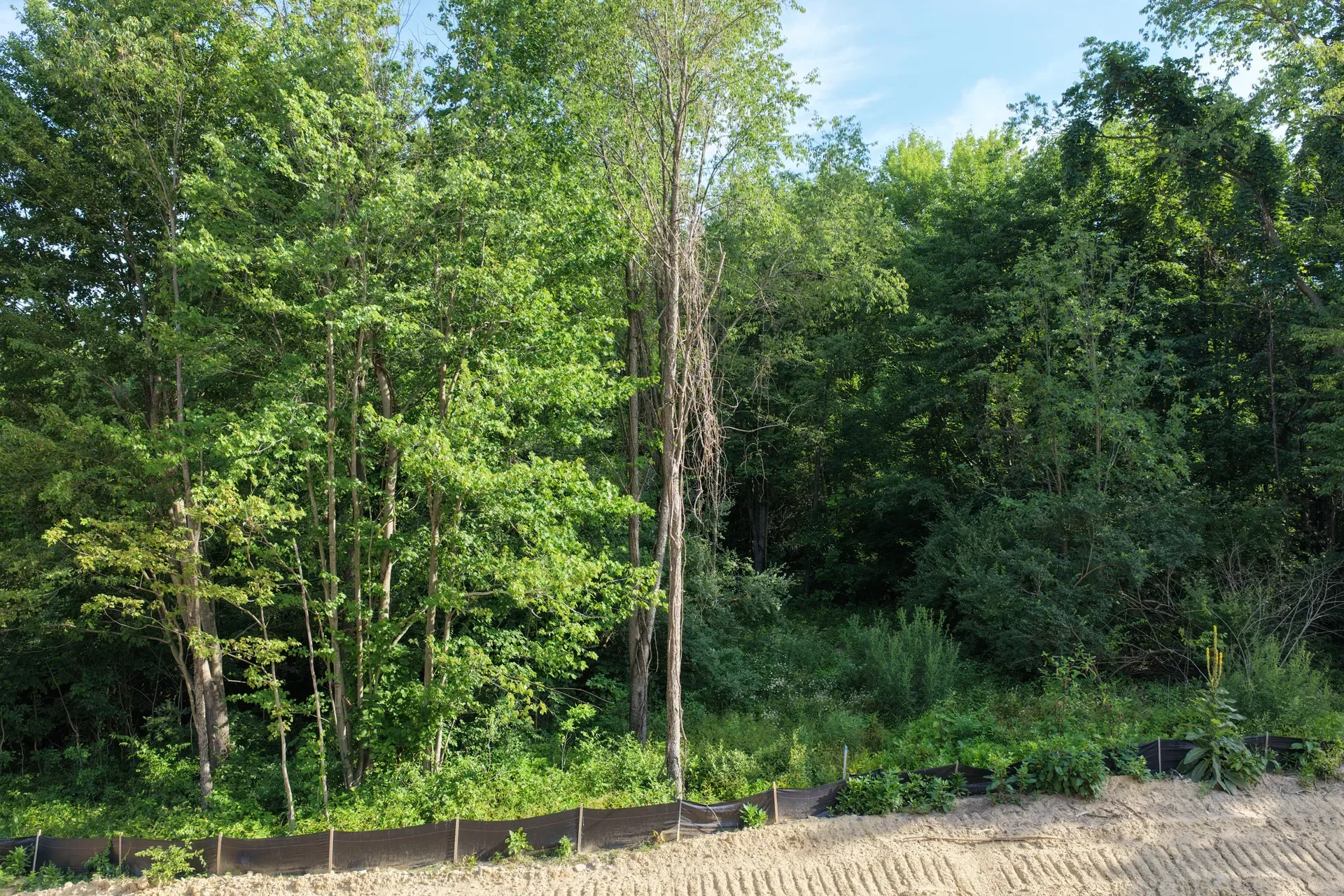
How high-performance building meets the wooded one-acre homesite at Oaks of Tyrone
Energy efficiency and a wooded homesite go together better than most buyers expect. At Oaks of Tyrone in Tyrone Township, Big Sky Development preserves mature trees through construction, and that canopy is a free climate feature: it shades the home in summer and breaks the winter wind. Combine that natural buffering with a tight building envelope and the heating and cooling load drops before you ever turn the thermostat.
Big Sky builds every home at Oaks of Tyrone with 2x6 exterior wall construction for deeper insulation, high-efficiency Carrier heating and cooling as standard, and American-made materials and labor, which keeps the build quality consistent across the whole envelope. Every home is backed by a 10-year in-house structural warranty, nine times longer than Michigan requires, so the performance of your home is protected long after the keys are handed over. Because buyers work with Big Sky's in-house design team, energy choices are made as part of the plan, not as an afterthought.
The wooded one-acre homesite is included in the package price at Oaks of Tyrone, homes start in the low $600s, and the community is served by Hartland Consolidated Schools. If you are comparing luxury homes near Hartland Schools, the efficiency conversation is part of the value conversation: a tighter home costs less to heat, cool, and maintain every year you live in it.
Frequently asked questions
What is a good HERS rating for a home?
Lower is better. The reference home scores 100, most existing Michigan homes score above 100, a typical new code-built home lands in the 60s, and a high-performance custom home can score in the 40s or lower. A score of zero means net zero, where the home produces as much energy as it uses.
What does envelope-first building mean?
Envelope-first, or high-performance, building puts the insulation, windows, air sealing, and ductwork ahead of bigger equipment. When the building envelope is tight and well insulated, a smaller, more efficient heating and cooling system keeps the home comfortable, and the conditioned air stays inside.
How much does an energy-efficient custom home cost to build in Michigan?
Custom new construction in Livingston County runs roughly $225 to $350 per square foot in 2026, and the energy package, meaning upgraded insulation, windows, and mechanicals, is a modest share of the total. Compare package prices by what they include rather than the sticker alone.
Is Michigan's energy code enough for a custom home?
Code is a minimum, not a target. Michigan raised its residential energy standards in April 2025, but a custom builder worth hiring builds beyond code and can document it, with specifications in writing and a HERS or blower-door test on the finished home.
How does a wooded lot help with energy efficiency?
Mature trees shade a home in summer and break the winter wind, which lowers the heating and cooling load before the mechanicals run. At Oaks of Tyrone, Big Sky Development preserves the tree canopy, and the wooded one-acre homesite is included in the package price.
What energy features come standard at Oaks of Tyrone?
Every home at Oaks of Tyrone is built with 2x6 exterior walls for deeper insulation and high-efficiency Carrier heating and cooling as standard, with American-made materials and labor. Buyers can add solar-ready wiring and other upgrades through the in-house design process.
Talk energy and floor plans with the team that builds here
The best way to judge how a home will perform is to walk the land and talk through the build spec. Schedule a tour with Rob Moen at Oaks of Tyrone, walk the preserved wooded one-acre homesites on Timber Trail, and get the full Big Sky Development standard-feature breakdown, including the 2x6 walls, high-efficiency Carrier systems, the 10-year structural warranty, and how the package price from the low $600s compares to buying land and building separately. Rob is at 810-691-0019 and happy to run the numbers for your situation.