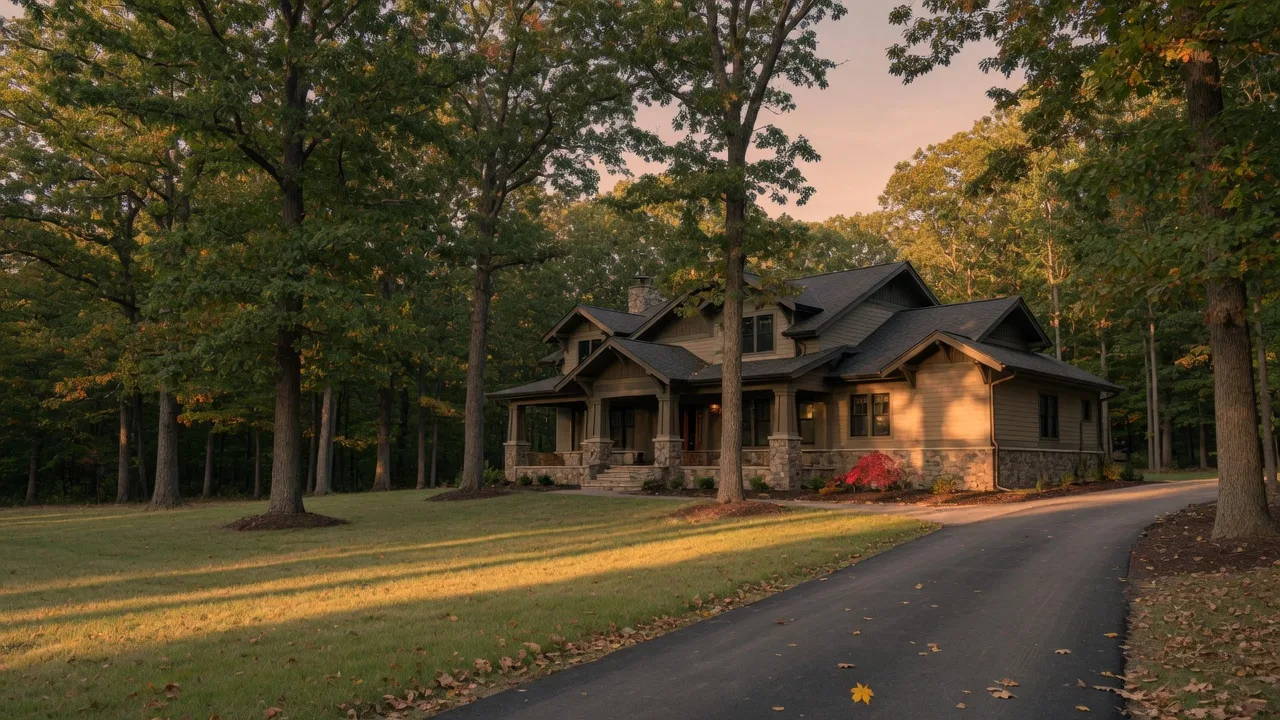
Radon is a colorless, odorless radioactive gas that enters homes from the soil below, and Michigan has more of it than most people expect. The state's environmental agency estimates that roughly one in four Michigan homes has indoor radon at or above the EPA action level of 4 picocuries per liter of air. For anyone building a custom home on a wooded lot near Fenton, Tyrone Township, or anywhere in Livingston County, the good news is that new construction is the best time to address radon, because the right measures can be built in for a fraction of what a retrofit costs later.
This guide explains why radon matters in Southeast Michigan, how radon-resistant new construction works, what to ask a builder like Big Sky Development, and why the topic belongs on your checklist when you tour communities like Oaks of Tyrone.
Why radon is a real concern in Michigan
Radon forms naturally when uranium in soil and rock breaks down, and it seeps up through the ground into basements, crawlspaces, and slab foundations. Because it is invisible and odorless, it can build up indoors without anyone noticing. Breathing it over many years is the second leading cause of lung cancer after smoking, which is why health and environmental agencies treat it seriously.
Michigan sits in a part of the country where elevated radon is common. State guidance is that roughly 25 percent of Michigan homes are expected to test at or above the EPA action level, and the state recommends testing for radon every two years, even in a home that already has a mitigation system. The good news for buyers of new construction is that radon levels can be controlled, and the most cost-effective control happens while the home is being framed rather than after the concrete is poured.
What radon-resistant new construction (RRNC) involves
Radon-resistant new construction, often called RRNC, is a set of techniques a builder can include during construction to keep soil gas out of the living space and, if needed, vent it safely above the roof. The EPA describes five core components:
- A gas-permeable layer. A bed of gravel under the slab that lets soil gas move freely beneath the home.
- Plastic sheeting. A vapor barrier with sealed seams placed on top of the gravel, under the slab or crawlspace floor.
- Sealing and caulking. Every below-grade opening, crack, and penetration in the slab and walls is sealed so gas cannot find a path inside.
- A vent pipe. A 3- or 4-inch PVC pipe runs from below the slab up through the house to above the roofline, venting soil gas outdoors without electricity.
- A junction box. A rough-in electrical box is placed in the attic so a fan can be added later if post-construction testing shows it is needed.
A properly installed passive RRNC system typically cuts indoor radon by about half, and it does the work without a fan or ongoing electricity. If a test after move-in still shows levels at or above the EPA action level, an electrician can add the fan to the already-wired system, upgrading it from passive to active with minimal disruption. Retrofitting a full mitigation system into an existing home, by contrast, is considerably more expensive and more invasive.
Why new construction is the best time to handle radon
This is the central point for custom home buyers: radon is far easier and cheaper to manage at the building stage than after the house is finished. During construction, the gravel layer, vapor barrier, sealing, and vent pipe cost very little relative to the overall home package. Trying to add those same protections to an existing home means drilling through a finished slab, running new pipework through finished walls, and often installing an active fan, which is a much larger job.
Because it is a question of health and of long-term value, it deserves a spot on the checklist right next to floor plan, lot, schools, and warranty when you compare new construction homes near Fenton and in Tyrone Township. A custom builder can and should walk you through how the home will be sealed and whether radon-resistant measures are part of the build.
Questions to ask your builder about radon
When you tour a community or sit down with a builder, these are the radon questions worth asking so you can make an informed decision:
- Does the build include radon-resistant new construction techniques, such as a sub-slab gravel layer, vapor barrier, and sealed penetrations?
- Is there a passive vent pipe from below the slab to above the roofline, and a wired junction box so a fan can be added later?
- How does the builder seal the foundation and any walkout or daylight areas, which are common on rolling wooded lots?
- Will there be a radon test after the home is complete, and who conducts it?
- What is the plan if a post-construction test reads at or above the EPA action level of 4 pCi/L?
A reputable builder will have direct answers rather than brushing the topic aside. The teams at Big Sky Development and The Moen Group are used to buyers who do their homework, and radon is one of those subjects where a straight answer matters.
What this means for building at Oaks of Tyrone
Oaks of Tyrone is a custom home community on 34 wooded one-acre homesites in Tyrone Township, Livingston County, with a Fenton address and Hartland Consolidated Schools. Because every home is custom built rather than produced on an assembly line, the construction details are decided home by home, which is exactly why radon-resistant measures are a natural fit for a buyer who wants a healthy, efficient house built to last.
Big Sky Development has been building custom homes across Southeast Michigan since 1994, more than 30 years and over 20 communities, with every home backed by a 10-year in-house structural warranty that is nine times longer than Michigan's one-year minimum. When you tour the model home or walk a homesite, it is a good moment to raise the radon conversation alongside floor plan, energy efficiency, and the wooded one-acre lot, all of which come together in the home package that starts in the low $600s with the lot included.
Frequently asked questions about radon in new Michigan homes
How common is radon in Michigan homes?
Michigan's environmental agency estimates that about one in four Michigan homes has indoor radon at or above the EPA action level of 4 picocuries per liter of air. Because levels vary by soil and location, the only way to know for sure in any given home is to test.
What is the EPA action level for radon?
The EPA action level is 4 picocuries per liter of air (4 pCi/L). At or above this level, the EPA recommends taking steps to reduce radon in the home. No level of radon is considered completely risk-free, but levels below 4 pCi/L are far less concerning.
Can radon be prevented in a new custom home?
Yes, radon can be greatly reduced through radon-resistant new construction. A passive system built into the foundation, including a gas-permeable layer, vapor barrier, sealed penetrations, and a vent pipe to the roofline, typically lowers indoor radon by about half and can be upgraded to an active system with a fan later if needed.
Is radon-resistant construction more expensive on a new home?
During construction, radon-resistant measures add very little to the overall cost of a home package, especially compared with the price of retrofitting an existing home. This is why building new is the ideal time to address radon.
Should I test for radon after building a new home?
Yes. The EPA recommends testing the finished home after move-in, even when radon-resistant measures were installed. Michigan also recommends retesting every two years. Testing is inexpensive, and if levels are elevated, the rough-in wiring makes adding a fan straightforward.
Are wooded lots in Livingston County at higher radon risk?
Radon risk depends on soil, geology, and the specific home, not on whether a lot is wooded. The right approach for any homesite, including the wooded one-acre lots near Fenton and Tyrone Township, is to build with radon-resistant measures and then test the finished home. Asking your builder about both steps covers you either way.
Build it right the first time. Tour Oaks of Tyrone.
The best way to see how construction quality, energy efficiency, and details like radon-resistant design come together is to tour a custom home in person. Rob Moen and the Big Sky Development team will show you the wooded one-acre homesites, walk you through the building process, and answer every question about how your new home is built. Schedule a private tour and bring your checklist.